


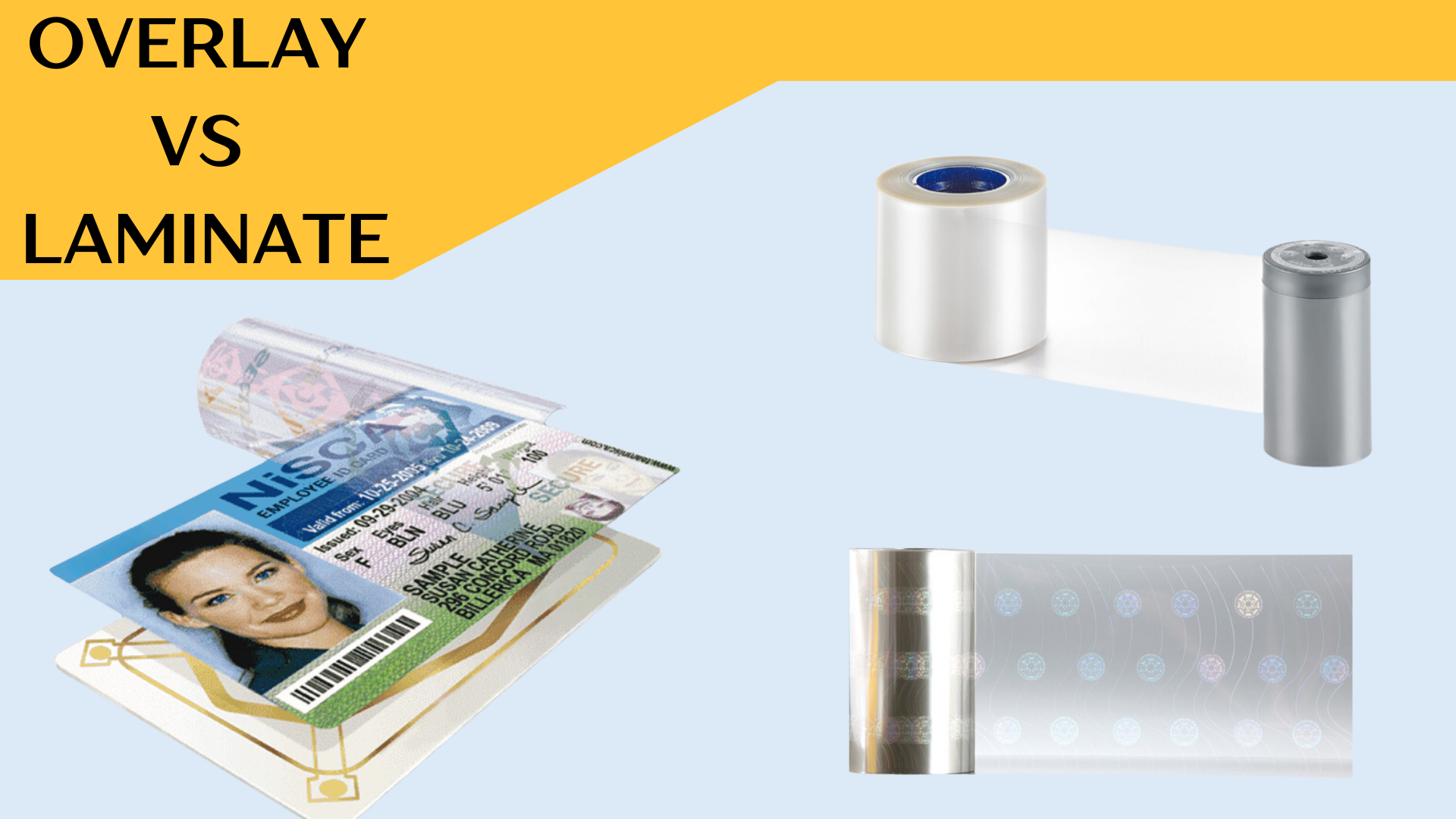
When it comes to producing ID cards, the decision between using an overlay or a laminate can significantly impact the durability, appearance, and cost of your cards. Both options serve to protect the printed surface of the card, but they do so in different ways and offer distinct advantages and disadvantages. Let’s explore the differences, pros, and cons of each to help you make an informed choice.
What is Overlay?
An overlay is a clear protective film applied directly onto the card’s surface during the printing process. It’s typically included in the ribbon used by many ID card printers. The overlay offers a basic level of protection against everyday wear and tear, such as minor scratches, fading, and exposure to moisture.
Pros of Overlay:
- Cost-Effective: Overlays are less expensive than laminates, making them a budget-friendly option for organizations that need to produce a high volume of cards.
- Ease of Use: Since the overlay is applied during the printing process, there’s no need for additional equipment or steps.
- Quick Production: The use of overlays allows for faster card production times, as the process is streamlined within the printer itself.
Cons of Overlay:
- Limited Durability: While overlays provide some protection, they are less durable than laminates and may wear down more quickly, especially in harsh environments.
- Lower Security: Overlays do not offer the same level of tamper resistance as laminates, making them less suitable for high-security ID cards.
What is Laminate?
Lamination involves applying a clear, durable film over the entire surface of the card using an external laminator. This process creates a strong, protective layer that shields the card from various environmental factors and enhances its longevity.
Pros of Laminate:
- Superior Durability: Laminates provide a robust barrier against physical damage, UV radiation, and chemicals, significantly extending the life of the card.
- Enhanced Security: Laminate films can incorporate additional security features like holograms, making the card more resistant to tampering and counterfeiting.
- Professional Appearance: Laminated cards often have a polished, professional finish that can enhance the overall look and feel of the ID.
Cons of Laminate:
- Higher Cost: The lamination process requires additional equipment and materials, making it a more expensive option compared to overlays.
- Longer Production Time: Lamination involves an extra step in the card production process, which can slow down the overall production speed.
- Complexity: Using a laminator adds complexity to the ID card production process, requiring additional training and maintenance.
Which Should You Choose?
Your choice between overlay and laminate depends largely on your specific needs and budget. If you require a high volume of cards with basic protection and need to keep costs low, overlay might be the best option. However, if your cards need to withstand harsh conditions, offer enhanced security, and have a polished, professional appearance, investing in a laminator for your ID card printer would be a wise decision.
Contact us Today to Learn More
If you’re interested in upgrading your ID card production process with a laminator, or if you want to explore how lamination can benefit your organization, contact us today! Our experts are ready to help you find the perfect solution tailored to your needs.